
Wdrożenie Asany często kojarzy się z konfiguracją narzędzia, dodaniem użytkowników, utworzeniem projektów, przygotowaniem szablonów i przeszkoleniem zespołu. To ważny etap, ale sam w sobie nie gwarantuje jeszcze poprawy efektywności organizacji. Jeśli Asana zostanie potraktowana wyłącznie jako nowe miejsce do przechowywania zadań, bardzo szybko może stać się kolejnym systemem, który funkcjonuje obok maili, arkuszy, komunikatorów i spotkań statusowych.
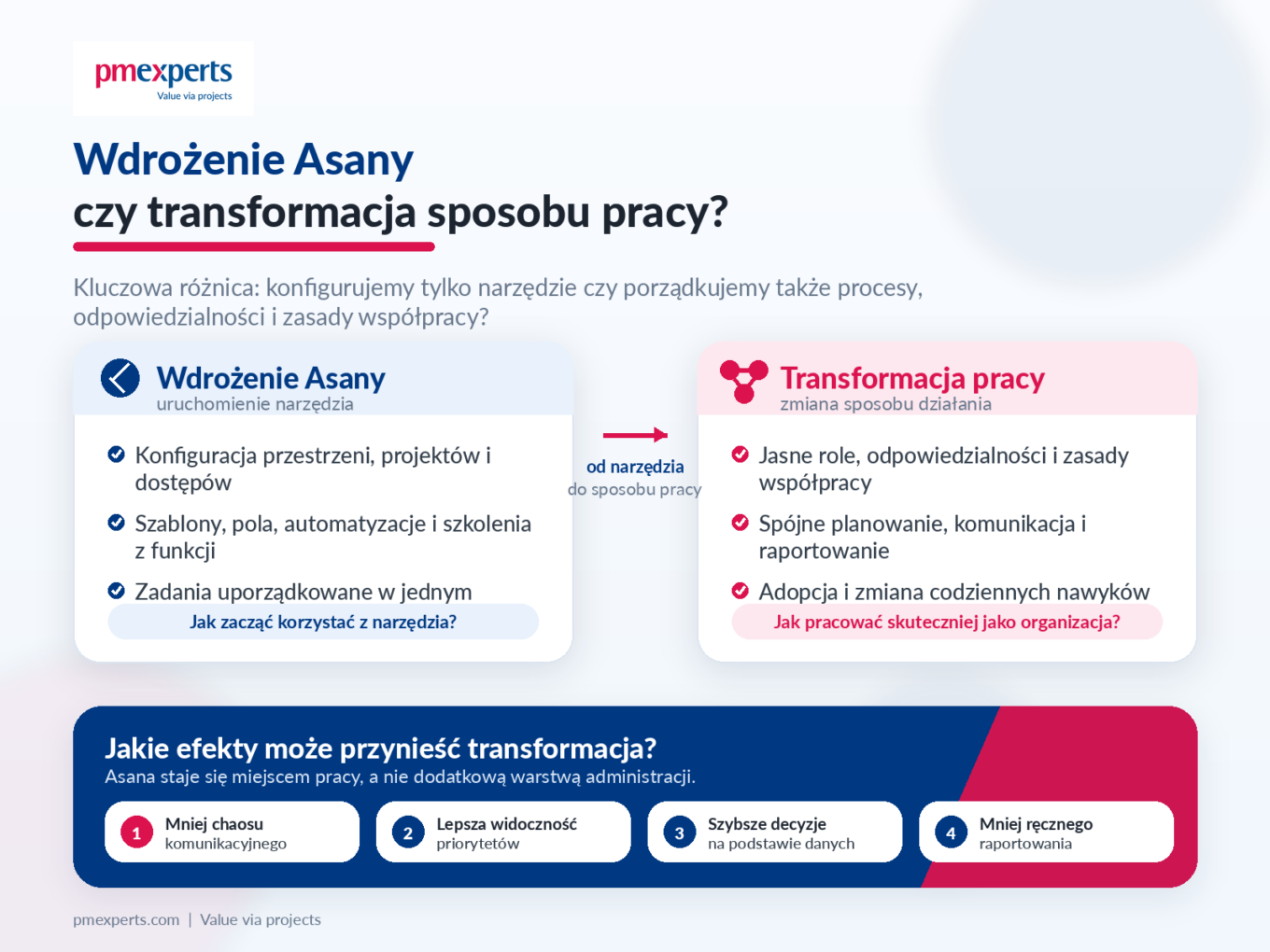
Różnica między wdrożeniem Asany a transformacją sposobu pracy polega na skali zmiany. Wdrożenie odpowiada przede wszystkim na pytanie: jak zacząć korzystać z narzędzia? Transformacja idzie krok dalej i koncentruje się na tym, jak uporządkować sposób planowania, komunikacji, współpracy i raportowania w organizacji, wykorzystując Asanę jako wsparcie tej zmiany.
To właśnie dlatego samo uruchomienie Asany nie wystarczy, aby organizacja zaczęła pracować sprawniej. Technologia może stworzyć warunki do większej przejrzystości, ale dopiero jasne procesy, odpowiedzialności i zasady współpracy decydują o tym, czy narzędzie faktycznie zacznie przynosić wartość biznesową.
Czym jest wdrożenie Asany?
Wdrożenie Asany to proces technicznego i organizacyjnego przygotowania narzędzia do pracy w firmie. Obejmuje zwykle konfigurację przestrzeni roboczej, utworzenie zespołów i projektów, nadanie dostępów, opracowanie podstawowych szablonów, ustawienie pól niestandardowych, automatyzacji oraz przeprowadzenie szkoleń dla użytkowników.
Na tym etapie organizacja uczy się, jak korzystać z Asany w codziennej pracy. Zespół poznaje podstawowe funkcje systemu, dowiaduje się, jak tworzyć zadania, przypisywać odpowiedzialności, ustalać terminy, korzystać z widoków projektów i śledzić postępy.
Dobrze przeprowadzone wdrożenie Asany pozwala uporządkować pierwsze obszary pracy i ograniczyć rozproszenie informacji. Nie rozwiązuje jednak automatycznie problemów, które wynikają z braku wspólnych zasad działania. Jeśli przed wdrożeniem organizacja miała niejasne odpowiedzialności, niespójne procesy, nadmiar spotkań lub chaotyczną komunikację, samo narzędzie nie usunie tych wyzwań.
It may even make them more visible.
Czym jest transformacja sposobu pracy z Asaną?
Transformacja sposobu pracy z Asaną oznacza szerszą zmianę organizacyjną. Nie chodzi wyłącznie o to, aby przenieść zadania do nowego systemu, ale o to, aby zbudować bardziej przejrzysty i skuteczny model współpracy.
W praktyce oznacza to uporządkowanie procesów, ról, odpowiedzialności, sposobu planowania pracy, komunikacji między zespołami oraz raportowania postępów. Asana staje się wtedy nie tylko narzędziem do zarządzania zadaniami, ale elementem większej zmiany w sposobie funkcjonowania organizacji.
Transformacja z Asaną odpowiada na pytania:
- How do we plan work within teams and across teams?
- Where should up to date information about tasks, projects and priorities be stored?
- Who is responsible for specific actions and decisions?
- How do we report progress without too many meetings and manual data collection?
- How do we reduce communication chaos and increase work visibility?
- How do we ensure that leaders have access to current information needed to make decisions?
- Jak Asana ma być zintegrowana z innymi narzędziami, z których korzysta organizacja?
Dopiero odpowiedzi na te pytania pozwalają wykorzystać potencjał Asany w pełni.
Wdrożenie Asany a transformacja pracy – kluczowa różnica
Asana jest jak dobrze przygotowane boisko do piłki nożnej: daje przestrzeń, strukturę i narzędzia do gry. Ale nawet najlepsze boisko nie wystarczy, jeśli drużyna nie wie, kto gra na jakiej pozycji, jak wygląda współpraca, kiedy podać piłkę i według jakiej taktyki działać.
Wdrożenie Asany porządkuje narzędzie. Transformacja porządkuje sposób gry. To ona określa zasady współpracy, odpowiedzialności, przepływ informacji i sposób podejmowania decyzji. Bez tego organizacja może mieć system, projekty, szablony i dashboardy, ale nadal działać w chaosie.
Dlatego samo uruchomienie Asany nie oznacza jeszcze, że firma zacznie pracować bardziej przejrzyście i skutecznie. Tak jak w sporcie, o wyniku nie decyduje samo wejście na boisko, ale sposób, w jaki zespół potrafi ze sobą współpracować.
Why is tool configuration alone not enough?
Many organizations implement a new tool expecting a quick improvement in efficiency. The problem is that a tool does not automatically change the way people work.
Jeśli zespół wcześniej raportował statusy w kilku miejscach, po wdrożeniu Asany może nadal robić to samo, tylko z dodatkowym systemem. Jeśli decyzje były podejmowane bez jasnych danych, Asana nie zmieni tego bez ustalenia zasad aktualizacji informacji. Jeśli odpowiedzialności były rozmyte, samo przypisanie zadań nie wystarczy, aby zespół zrozumiał, kto podejmuje decyzje, kto akceptuje rezultaty i kto odpowiada za komunikację z interesariuszami.
Najczęstsze problemy po wdrożeniu Asany wynikają nie z samego narzędzia, ale z braku uzgodnionego sposobu pracy. Użytkownicy wiedzą, jak klikać w Asanie, ale nie zawsze wiedzą, dlaczego jest to ważne i jakie procesy powinni w niej prowadzić. Nie jest dla nich jasne, które informacje powinny znaleźć się w zadaniu, kiedy należy aktualizować status, gdzie podejmować decyzje i które dane są źródłem prawdy dla liderów.
W takiej sytuacji Asana nie staje się źródłem prawdy o pracy organizacji. Staje się dodatkową warstwą administracyjną.
Kiedy organizacja potrzebuje czegoś więcej niż wdrożenia Asany?
Samo wdrożenie narzędzia może być wystarczające, jeśli organizacja ma już dojrzałe procesy, jasno określone role i dobrze działający model komunikacji. Wtedy Asana może po prostu uporządkować pracę w jednym miejscu i ułatwić codzienne zarządzanie zadaniami.
A deeper transformation is needed when the organization’s problems are not only about tools, but about the way it operates.
It is worth considering transformation if situations like these often occur in the organization:
- tasks and agreements get lost in emails, messengers or meeting notes,
- teams work in different tools and it is difficult to determine the current status of activities,
- leaders do not have current visibility into project progress,
- reporting requires manual collection of information from many sources,
- responsibilities are unclear or dispersed,
- status meetings take up too much time,
- processes differ between teams and are difficult to scale,
- implemented tools are not used consistently,
- employees treat the system as an additional obligation, not as real support for their work.
W takich przypadkach Asana może być bardzo skutecznym narzędziem zmiany, ale tylko wtedy, gdy jej wdrożenie zostanie połączone z uporządkowaniem sposobu pracy.
Jak wygląda transformacja pracy z Asaną w praktyce?
Transformacja z Asaną powinna rozpocząć się od zrozumienia obecnego sposobu działania organizacji. Przed konfiguracją narzędzia warto sprawdzić, jak zespoły planują pracę, gdzie przechowują informacje, jak raportują statusy, jak podejmują decyzje i które obszary generują najwięcej chaosu.
Dopiero na tej podstawie można zaprojektować docelowy model pracy w Asanie. Obejmuje on m.in. strukturę zespołów i projektów, standardy tworzenia zadań, zasady korzystania z pól niestandardowych, widoków, statusów, portfeli, automatyzacji i dashboardów. Ważne jest również określenie, które informacje powinny być aktualizowane przez użytkowników, jak często i w jakim celu.
Transformacja nie kończy się jednak na konfiguracji. Kluczowe znaczenie ma adopcja narzędzia, czyli realne przyjęcie nowego sposobu pracy przez zespoły. Obejmuje to komunikację zmiany, szkolenia dopasowane do ról, wsparcie liderów, monitorowanie wykorzystania Asany i stopniowe doskonalenie procesów.
W dobrze prowadzonej transformacji Asana staje się naturalnym miejscem pracy operacyjnej i projektowej. Zespoły wiedzą, gdzie szukać informacji, liderzy mają dostęp do aktualnych danych, a raportowanie przestaje opierać się na ręcznym odpytywaniu pracowników o status zadań.
Jakie efekty może przynieść transformacja z Asaną?
Dobrze przeprowadzona transformacja sposobu pracy z wykorzystaniem Asany pomaga zwiększyć przejrzystość działań w organizacji. Zespoły lepiej rozumieją priorytety, odpowiedzialności i zależności między zadaniami. Liderzy zyskują większą kontrolę nad postępami bez konieczności organizowania nadmiarowych spotkań statusowych.
One of the most important effects is reducing communication chaos. Information about tasks, deadlines, owners and decisions is stored in one place, making it easier to return to agreements and check the current status of work.
Transformacja może również poprawić jakość raportowania. Jeśli dane w Asanie są aktualne i spójnie uzupełniane, organizacja może szybciej identyfikować opóźnienia, przeciążenia zespołów, ryzyka i zależności między projektami. To z kolei ułatwia podejmowanie decyzji na podstawie faktów, a nie niepełnych lub nieaktualnych informacji.
W dłuższej perspektywie Asana może wspierać budowanie bardziej dojrzałej kultury pracy: opartej na transparentności, odpowiedzialności i lepszej współpracy między zespołami.
Rola liderów w transformacji z Asaną
Jednym z kluczowych warunków powodzenia transformacji jest zaangażowanie liderów. Jeśli Asana ma stać się realnym wsparciem organizacji, nie może być postrzegana wyłącznie jako narzędzie operacyjne dla zespołów wykonawczych.
Liderzy powinni jasno komunikować, dlaczego organizacja zmienia sposób pracy, jakie problemy chce rozwiązać i jaką rolę będzie pełnić Asana. Ważne jest również, aby sami korzystali z danych dostępnych w systemie,na przykład podczas przeglądów statusów, spotkań zarządczych czy rozmów o priorytetach.
Jeśli liderzy nadal oczekują raportów przygotowywanych poza Asaną, zespoły szybko uznają, że narzędzie nie jest głównym źródłem informacji. Jeśli natomiast decyzje są podejmowane na podstawie danych z Asany, rośnie motywacja do aktualizowania zadań, statusów i projektów.
Transformation of the way work gets done therefore requires not only user training, but also a change in management habits.
The most common mistake: treating implementation as an IT project
Najczęstszym błędem przy wdrażaniu Asany jest traktowanie całego procesu jak projektu IT, który kończy się w momencie uruchomienia systemu. Organizacja może wtedy odhaczyć konfigurację, dostęp użytkowników, szablony, automatyzacje i szkolenia, ale nadal nie mieć wspólnego sposobu prowadzenia pracy.
Na początku wszystko może wyglądać poprawnie. Projekty są utworzone, użytkownicy mają dostęp, a zespół wie, gdzie kliknąć. Problem pojawia się po kilku tygodniach, kiedy każdy zaczyna korzystać z systemu na swój sposób. Jedni aktualizują statusy regularnie, inni tylko przed spotkaniem. Część decyzji zapada w komentarzach, część na mailu, a część podczas rozmów, które nie zostają nigdzie zapisane. Dashboardy istnieją, ale nie pokazują pełnego obrazu, bo dane nie są uzupełniane według wspólnego standardu.
This is the moment when it becomes clear that tool implementation and changing the way work gets done are two different levels of action.
That is why, before implementation or in parallel with it, it is worth asking a few questions:
- Jakie problemy chcemy rozwiązać dzięki Asanie?
- Which processes need to be organized?
- What information should be visible to teams, leaders and the management board?
- Who is responsible for keeping data up to date?
- Jak Asana ma być zintegrowana z innymi narzędziami?
- How will we measure the effectiveness of implementation?
- Which behaviors and habits should change?
Without answers to these questions, implementation may end in technical success, but organizational disappointment.
Asana jako narzędzie wspierające zmianę
Asana może znacząco usprawnić pracę organizacji, ale jej wartość zależy od tego, jak zostanie osadzona w codziennych procesach. Może wspierać zarządzanie zadaniami, projektami, kampaniami, procesami operacyjnymi, portfelami inicjatyw i raportowaniem. Może również pomóc zespołom ograniczyć liczbę spotkań, uporządkować komunikację i zwiększyć widoczność pracy.
However, it will not replace a conversation about how the organization wants to work. It will not resolve priority conflicts if there is no process for setting priorities. It will not improve decision making if it is unclear who is responsible for what. It will not provide reliable reports if data is not updated regularly.
Dlatego najlepsze efekty pojawiają się wtedy, gdy wdrożenie Asany jest częścią szerszej transformacji sposobu pracy.
Wdrożenie czy transformacja: czego potrzebuje Twoja organizacja?
Nie każda firma potrzebuje od razu szerokiej transformacji. Czasem wystarczy sprawne wdrożenie Asany, uporządkowanie kilku podstawowych procesów i przeszkolenie zespołu. Dotyczy to szczególnie organizacji, które mają już jasne zasady współpracy, ale potrzebują lepszego narzędzia do zarządzania zadaniami i projektami.
Jeśli jednak problemy dotyczą komunikacji, odpowiedzialności, widoczności działań, raportowania lub współpracy między zespołami, warto potraktować Asanę jako element większej zmiany. Wtedy celem nie jest samo uruchomienie systemu, ale poprawa sposobu pracy organizacji.
This is the difference between moving tasks to a new place and building an environment in which teams work more consciously, transparently and effectively.
From tool implementation to changing the way work gets done
Wdrożenie Asany i transformacja sposobu pracy to nie to samo. Wdrożenie pozwala rozpocząć korzystanie z narzędzia. Transformacja pozwala wykorzystać je do realnego usprawnienia pracy organizacji.
Sama konfiguracja systemu, przygotowanie szablonów i przeszkolenie użytkowników nie wystarczą, jeśli nie zmieni się sposób planowania, komunikacji, raportowania i podejmowania decyzji. Asana może być skutecznym wsparciem dla organizacji, ale tylko wtedy, gdy zostanie połączona z jasnymi procesami, odpowiedzialnościami i konsekwentnym zarządzaniem zmianą.
W pracy z Asaną nie chodzi więc wyłącznie o technologię. Chodzi o ludzi, procesy i zmianę codziennych nawyków organizacyjnych.
Asana może być początkiem ważnej zmiany, pod warunkiem, że wdrożenie potraktujemy jako element szerszej transformacji sposobu pracy.

 Polski
  English